
Leis sobre Câmeras Veiculares para Frotas e Padrões de Segurança da FMCSA
Valide as instalações de câmeras em frotas de acordo com as normas de montagem da FMCSA, leis estaduais de privacidade e mandatos de retenção de dados para garantir a conformidade e reduzir custos.

Leis sobre câmeras veiculares em frotas e normas de segurança da FMCSA
A conformidade das câmeras em frotas baseia-se em duas camadas legais: as normas federais da FMCSA, que regem onde o hardware pode ser montado, e os estatutos estaduais, que regem a privacidade do motorista e o consentimento para gravação de áudio. Qualquer programa de câmeras deve atender a ambos simultaneamente. Na prática, isso significa que as equipes de compras precisam confirmar que as lentes voltadas para a via e para o motorista estejam dentro dos regulamentos de visibilidade do para-brisa e que os protocolos de gravação de áudio cumpram as leis de consentimento de cada estado na rota. Ao acertar esses pontos, os mesmos sistemas de monitoramento que mantêm a frota em conformidade também fornecem alertas de treinamento em tempo real, fortalecem a proteção contra responsabilidades e podem ajudar a reduzir os prêmios de seguro ao longo do tempo.
Quais são as leis federais e estaduais para câmeras em caminhões comerciais?
A Federal Motor Carrier Safety Administration (FMCSA) dita o posicionamento do hardware e os padrões básicos de segurança, enquanto as leis estaduais regem a privacidade e o consentimento de ambas as partes para a captura de áudio. Frotas que operam entre estados devem configurar sistemas de monitoramento de motoristas para adotar, por padrão, o limite de privacidade estadual mais rigoroso, a fim de evitar violações de conformidade.
Câmeras voltadas para a estrada capturam vias públicas e enfrentam restrições mínimas de privacidade. Por outro lado, as lentes voltadas para o motorista registram o interior da cabine, acionando leis de expectativa razoável de privacidade. A gravação de áudio na cabine de um veículo comercial em diferentes estados só é legal se o sistema estiver em conformidade com os estatutos de interceptação telefônica. Em jurisdições de consentimento de ambas as partes, a gravação contínua de áudio sem autorizações explícitas do motorista constitui uma violação direta dos direitos de privacidade do funcionário.
Onde é legal montar uma câmera no para-brisa de um caminhão de acordo com as regras da FMCSA?
As regras de visibilidade do para-brisa da FMCSA determinam que a tecnologia de segurança do veículo deve ser montada a no máximo 10 cm abaixo da borda superior da área varrida pelos limpadores de para-brisa, ou a no máximo 18 cm acima da borda inferior. A adesão a esses limites numéricos garante que o hardware não obstrua a linha de visão do motorista, evitando falhas em inspeções do DOT.
Para auditar a instalação atual do seu hardware, aplique a seguinte lógica de limites:
- Zona de montagem superior: Hardware posicionado < 10 cm da área varrida superior = APROVADO. Hardware > 10 cm = REPROVADO (Violação do DOT).
- Zona de montagem inferior: Hardware posicionado a < 7 polegadas da área de varredura inferior = APROVADO. Hardware > 7 polegadas = REPROVADO (Violação do DOT).
- Obstrução da linha de visão: Qualquer intrusão de hardware fora do perímetro definido = ALTO RISCO. Ação: Realoque o hardware da câmera imediatamente antes do envio.
Quais são os requisitos de retenção de dados para filmagens de câmeras veiculares de frotas após um acidente?
Os protocolos de retenção de dados pós-acidente exigem que as frotas protejam e exportem as filmagens e os dados telemáticos relevantes para um cofre na nuvem à prova de violações dentro de 24 horas após o incidente. Preservar essas filmagens por um período mínimo de 6 a 36 meses, dependendo do estatuto de limitações estadual, protege a organização contra reivindicações de responsabilidade tardias.
Os protocolos padrão de sobrescrita em nós de borda locais excluem as filmagens a cada 30 a 60 dias. Em caso de colisão, os administradores devem marcar manualmente a filmagem para armazenamento indefinido na nuvem. Deixar de proteger os dados de telemetria antes do ciclo de sobrescrita local expõe a frota a alegações de destruição de provas durante litígios.
Como os sistemas de monitoramento de motoristas afetam as taxas de seguro de caminhões comerciais?
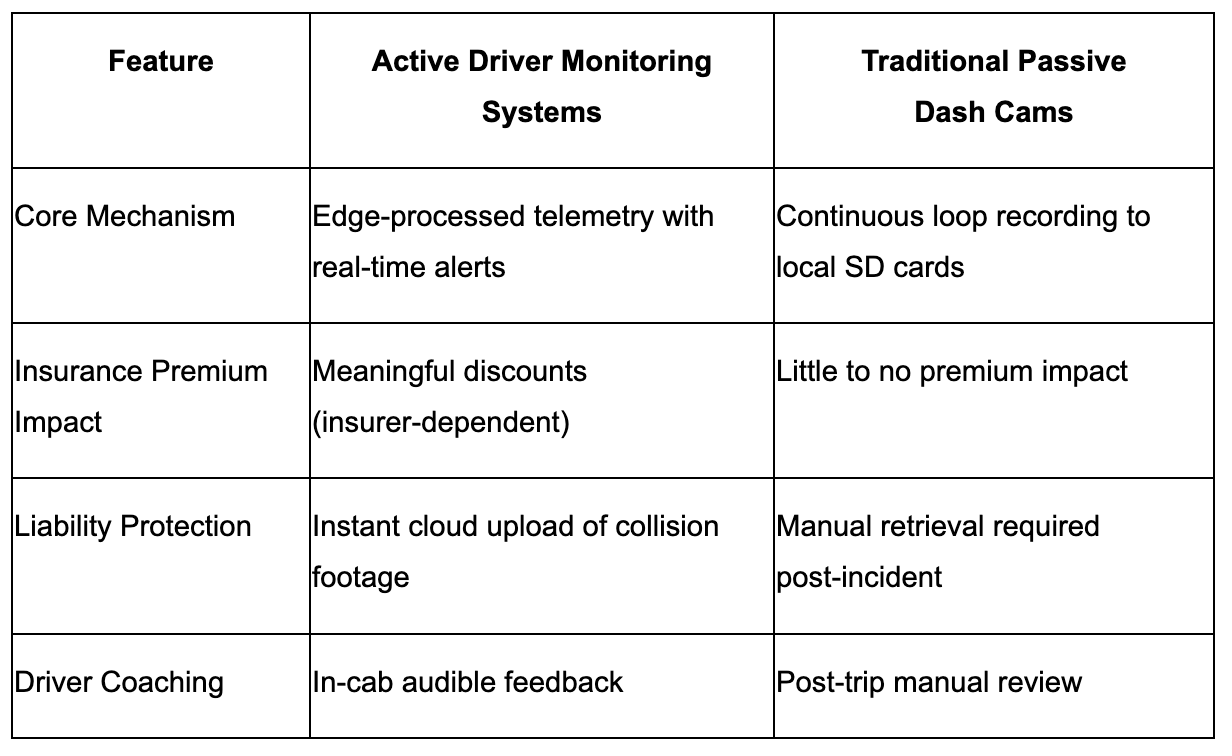
Modelos de risco atuariais aplicam descontos nos prêmios para frotas que implementam sistemas ativos de monitoramento de motoristas, uma vez que o hardware fornece evidências incontestáveis de culpa e reduz a frequência de colisões. A implementação de telemática de vídeo processada na borda pode contribuir para reduções significativas nas taxas de seguro de caminhões comerciais na renovação da apólice, sendo que o desconto exato depende da seguradora, do histórico de sinistros da frota e do tipo de cobertura.
Como criar uma política de câmeras para frotas que os motoristas aceitem e em que confiem?
Políticas transparentes de câmeras para frotas estabelecem limites claros sobre o acesso aos dados, definindo exatamente quem analisa as filmagens e sob quais eventos de disparo específicos. Codificar essas regras no manual do motorista altera a percepção das câmeras voltadas para o condutor, deixando de ser uma vigilância punitiva para se tornar um escudo de responsabilidade, acelerando a adoção pela equipe.
Considerações antes da implementação:
- Não implemente gravação de áudio contínua em estados que exigem consentimento de ambas as partes sem termos de autorização assinados pelos motoristas em arquivo.
- Certifique-se de que o hardware de processamento de borda permita um modo de privacidade iniciado pelo motorista durante as horas de descanso em cabines leito.
- Defina listas de controle de acesso (ACLs) rigorosas, limitando o acesso às filmagens apenas a gerentes de segurança autorizados.
- Foque o protocolo de revisão inteiramente na exoneração e em cartões de pontuação de segurança estruturados, em vez de microgerenciamento.
Pronto para implementar hardware em conformidade em toda a sua frota? Agende uma demonstração técnica hoje mesmo para validar o hardware de acordo com seus requisitos operacionais e as normas da FMCSA.
Respostas rápidas para gestores de frota
Como os sistemas de monitoramento de motoristas se integram à telemática de frota existente?
Os sistemas de monitoramento de motoristas conectam-se diretamente à porta de diagnóstico OBD-II ou J1939 do veículo, sincronizando as filmagens com a telemetria do motor. Essa integração alinha dados de frenagem brusca ou aceleração a registros de vídeo específicos para uma análise de risco unificada.
Qual é o prazo típico de retorno sobre o investimento (ROI) para a implementação de câmeras veiculares comerciais?
O prazo de ROI varia de acordo com o tamanho da frota, as taxas de incidentes de referência e a forma como a implementação é realizada. Muitas frotas começam a ver um valor mensurável já no primeiro ano, à medida que os prêmios de seguro diminuem e as evidências em vídeo ajudam a descartar rapidamente reivindicações de responsabilidade fraudulentas.
Como o hardware de processamento de borda detecta a distração do motorista mecanicamente?
Os nós de borda analisam quadros de vídeo localmente usando redes neurais para rastrear a posição da cabeça e o olhar. Quando o sistema detecta um desvio da linha de visão frontal superior a três segundos, ele dispara um alerta sonoro na cabine e registra um evento de telemetria.
É legal gravar áudio na cabine de um veículo comercial em diferentes estados?
A gravação de áudio exige o consentimento explícito do motorista em estados que exigem a concordância de ambas as partes, como Califórnia e Illinois. As frotas devem desativar a captura contínua de áudio ou exigir termos de consentimento assinados durante a integração para evitar violações de escuta ilegal.
Existem regras de privacidade diferentes para câmeras voltadas para a estrada e para o motorista?
As câmeras voltadas para a estrada registram vias públicas e, geralmente, enfrentam restrições de privacidade mínimas. As lentes voltadas para o motorista registram o interior da cabine, exigindo que as frotas cumpram rigorosamente as leis estaduais de vigilância e privacidade dos funcionários.
Quais são as leis federais e estaduais para câmeras veiculares em caminhões comerciais?
As leis federais determinam as normas de instalação do equipamento e os padrões básicos de segurança, enquanto as leis estaduais regem a privacidade de dados e o consentimento para gravação de áudio. Frotas que operam entre estados devem configurar seus sistemas para atender às regulamentações estaduais mais rigorosas de suas rotas.
