
Why Your Video Telematics Roadmap is Already Obsolete
Stop comparing camera specs. The best video telematics strategy for TSPs is built on hardware flexibility and a white-label model that avoids channel conflict.
.png)
A video telematics platform built on an edge-first, hardware-agnostic architecture is the foundation of a winning TSP roadmap. It lets Telematics Service Providers launch white-labeled safety solutions in weeks rather than quarters, sidestep channel conflict, and start pulling in new revenue from the customers you already have.
How TSPs Get Their Platform Strategy Wrong
If you're a product manager at a TSP, your roadmap probably treats video as one more sensor to bolt on. The whole evaluation process turns into a feature bake-off between vertically integrated hardware companies. This is a trap. It mistakes a camera spec sheet for a go-to-market strategy and locks your entire business into a model designed around your vendor's growth.
This whole approach fails because it puts hardware before the business model. TSPs get stuck in a closed ecosystem where one vendor controls the camera, the software, and the brand. That creates instant channel conflict: you're forced to resell a competitor's name to your own customers. Worse, your roadmap is now chained to their hardware release cycle, giving you zero flexibility when a customer wants to use cameras they already own or a better, cheaper device comes along.
What Framework Separates a Winning Roadmap from a Stalled One?
A winning video telematics roadmap isn't built on camera resolution. It's built on platform architecture and go-to-market flexibility. That means shifting your evaluation from a feature checklist to a strategic framework. The right choice is the one that gives you control over your brand, your hardware, and your customer relationships.
Use this decision framework to evaluate potential video telematics partners:
- Go-to-Market Model: if the vendor sells their own brand directly to fleets, they are your competitor. A real partnership is a 100% white-label model. The only brand your customer should see is yours.
- Hardware Flexibility: if the platform only works with the vendor's proprietary cameras, your roadmap is hostage to their supply chain and pricing. A hardware-agnostic platform means you can source cameras from multiple OEMs, protecting your margins and giving your customers choices.
- API and Integration Layer: if the platform has weak, batch-based APIs, integration will be a permanent engineering headache. You need an API-first platform with real-time data streaming to build a user experience that merges video with your core telematics data.
The Real-World Cost of a Closed Ecosystem
Here's how this often plays out. A product manager at a mid-sized TSP spends a full quarter integrating a well-known video telematics solution. The tech works. The pilot is a success. Six months later, though, their biggest enterprise customer is ready for a full rollout with one condition: they want to use the cameras they already have installed from another manufacturer. The TSP's new "partner" says no to third-party hardware. The deal stalls.
Now the product manager is stuck. They either tell their largest customer 'no' or they scrap the project and start another six-month integration with someone else. The initial evaluation, which obsessed over in-cab features, completely ignored the single most important question: hardware flexibility. The cost wasn't just wasted engineering cycles; it was a key account on the verge of walking away.
With a hardware-agnostic platform, that conversation is entirely different. The answer to the customer is 'yes.' The integration becomes about normalizing data from existing cameras, a job that takes weeks, not quarters. That's the tangible difference between a roadmap that serves your vendor and one that serves your customer.
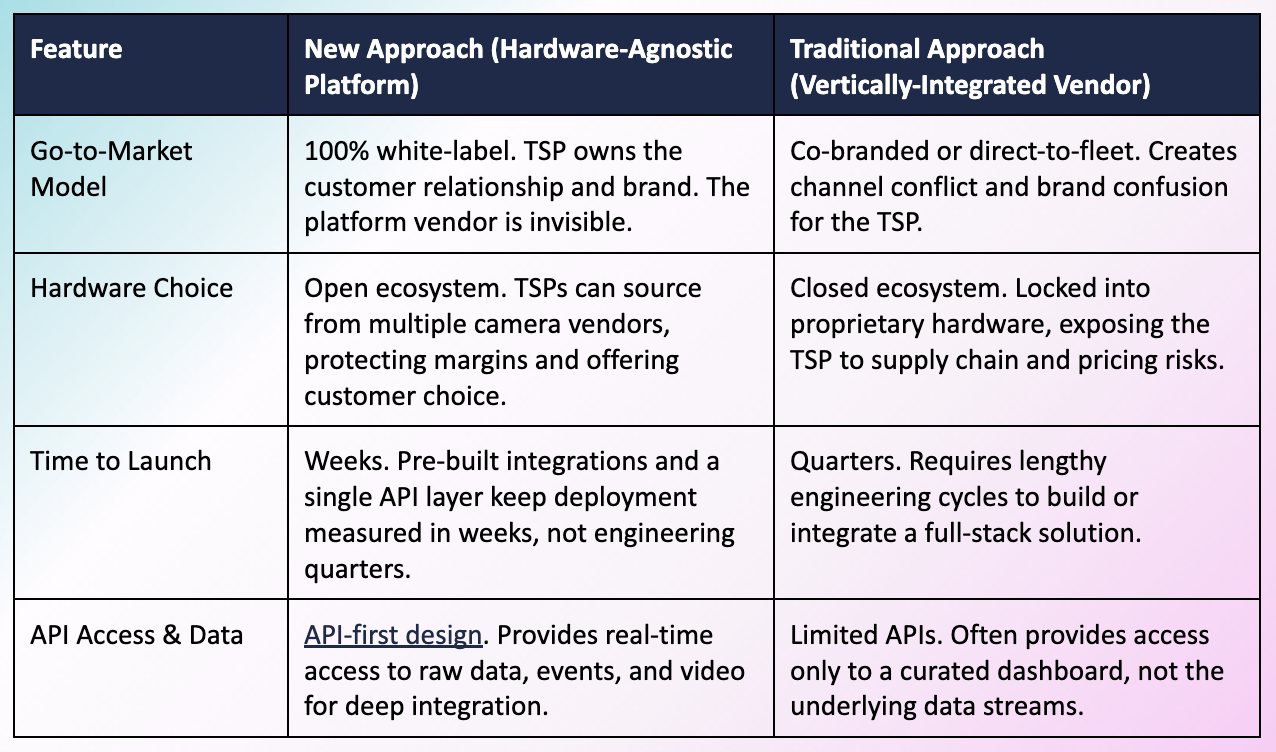
What Are the Trade-offs Between an Open vs. Closed Platform?
This is the single most important decision in a TSP's video telematics strategy: an open, hardware-agnostic platform versus a closed, vertically-integrated system. The trade-offs go far beyond technology. They directly impact your revenue, customer retention, and operational agility.
Ready to pressure-test your current roadmap against a hardware-agnostic model? Get in touch to book a technical evaluation and map what a white-label launch would look like on your existing stack.
Quick Answers for TSPs
How should TSPs price a white-labeled video telematics offering?
You structure pricing in tiers based on features. A base tier can cover historical video lookup and basic event data. Premium tiers add the high-value stuff: real-time in-cab coaching with edge AI, advanced driver scoring, and deep API access. This lets fleets pick the service level that fits their budget and operational needs, which means you can sell to a much bigger piece of the market.
What are the technical needs for integrating a white-label video platform?
The only prerequisite that matters is a solid set of APIs for pulling in event data, video, and device telemetry. The platform has to provide a clean integration path to link your existing telematics data (GPS, CAN bus) with video events. A hardware-agnostic platform makes this simpler because it's built to work with all kinds of cameras without demanding specific firmware or hardware from your customers.
How is an 'edge AI' approach different from a cloud-based one?
Edge AI runs analysis right on the camera. This local processing catches risks like distraction or tailgating instantly, which allows for real-time in-cab alerts. A cloud-first approach has to upload the video before it can be analyzed, creating delays and burning through cellular data. Edge AI gives immediate driver feedback and cuts data transmission costs sharply because it only sends up the clips that matter.
How do TSPs handle fleet manager concerns about driver privacy?
The best practice is to frame monitoring around discrete, AI-verified events. When you use edge AI to analyze video on the device, the system only flags and uploads short clips of specific, risky behaviors. This respects privacy because managers review objective, verified safety events rather than a live feed of the cab. You still need clear communication about what's being monitored and why to get drivers on board.
How will new AI trends change the next generation of video telematics?
The future is multimodal AI, which will fuse video with other sensor data to get a much deeper understanding of context. This leads to predictive coaching, identifying risk patterns before they turn into incidents. Expect to see more advanced driver state analysis, like cognitive load and even positive behavior recognition. The focus will shift from just punitive alerts to a more complete performance management tool.
