
Driver Safety Monitoring Software: How It Works and What to Look For
Discover how driver safety monitoring software uses cameras, edge AI, real-time alerts, and coaching to prevent crashes, protect drivers, improve fleet safety, and reduce operating costs.
Most crashes in a commercial fleet trace back to a moment of human error. A driver glances at a phone, follows too closely, or fights fatigue on a long haul. These moments are often preventable, yet a fleet manager rarely sees them until a claim lands or a vehicle comes back damaged.
Driver safety monitoring software exists to change that. It gives fleets a way to catch risky behavior as it happens and help drivers correct it before an accident occurs. This guide explains what the software is, how it works, the behaviors it detects, and what to look for when you choose a system.
What Is Driver Safety Monitoring Software?
Driver safety monitoring software is a system that uses in-vehicle cameras and sensors to watch how a vehicle is driven, spot risky behavior, and help drivers correct it. It turns everyday driving into information a fleet can act on, so unsafe habits get addressed instead of ignored.
The reason this matters comes back to a simple truth. Most road accidents are caused by human error, and the behaviors behind them are often preventable. When a system can notice those behaviors early, a fleet can step in before they lead to a crash.
This is where a monitoring system differs from a basic dashcam. A basic dashcam records what happens and stores the footage for later. A driver safety monitoring system goes further, analyzing the behavior it sees and responding to it, either by alerting the driver in the moment or by giving a safety manager the context to coach afterward.
At LightMetrics, this distinction shaped our founding conviction. We built our technology to prevent crashes, not only to document them. Monitoring is most valuable when it works as prevention.
How Driver Safety Monitoring Software Works
A driver safety monitoring system starts with cameras that see the vehicle and its surroundings. On-device intelligence then makes sense of what those cameras capture. From there, the system turns its findings into alerts that reach the driver or the safety manager.
Each part depends on the others. The sections below walk through how they fit together, starting with the cameras.
Cameras That Watch the Road and the Driver
Most systems use two kinds of cameras. A road-facing camera looks out through the windshield at the road ahead. It sees other vehicles, lane markings, traffic signals, and how much space sits between the vehicle and whatever is in front of it.
A driver-facing camera points inward at the cab. It watches the driver for signs of distraction, phone use, or drowsiness. On its own, each camera tells only part of the story.
Pairing both views is what lets a system understand context. The road-facing camera shows what was happening on the road, and the driver-facing camera shows what the driver was doing at the same moment, so together they explain not just that a hard brake happened, but why. RideView analyzes both road-facing and driver-facing cameras for exactly this reason.
Edge AI That Analyzes Behavior in Real Time
Once the cameras capture the scene, something has to make sense of it. That job belongs to the AI. Where the AI runs turns out to matter a great deal.
Edge AI means the analysis happens on the device inside the vehicle rather than only later in the cloud. The camera itself understands what it sees, right there on the road, without waiting to send video somewhere else first.
That difference changes what the system can do. Cloud-only analysis produces a report a safety manager reviews days later, when the moment has long passed. Edge AI can react while the driver still has time to act, which is the whole point of prevention.
LightMetrics runs its edge AI on competitively priced cameras. It coaches drivers in the cabin before bad outcomes happen.
In-Cab Alerts and Driver Coaching
Edge AI makes two kinds of feedback possible, and they work together. A real-time in-cab alert speaks up in the moment, warning a driver who is following too closely or looking away from the road so they can correct right away.
After-the-fact coaching happens later, away from the wheel. A safety manager reviews what occurred and talks it through with the driver, turning a single event into a lasting habit.
Driver scorecards and coaching workflows connect the two. A scorecard summarizes how a driver is doing over time, and coaching workflows give managers a consistent way to follow up. The alert catches the moment, and the coaching builds the habit that keeps it from repeating.
Risky Behaviors These Systems Detect
Driver safety monitoring systems are built to catch the specific behaviors most likely to end in a crash. Each one is dangerous in its own way, and together they cover the errors fleets see most often.
- Distraction and phone use: A driver looking at a phone or away from the road cannot react to what happens ahead.
- Drowsiness: Fatigue slows reactions and, at its worst, closes a driver's eyes entirely.
- Tailgating and forward collision risk: Following too closely leaves no room to stop when traffic slows suddenly.
- Speeding: Higher speed shortens the time a driver has to respond and makes any impact worse.
- Harsh braking: Sudden hard braking often signals inattention and raises the risk of being hit from behind.
- Lane drifting: Drifting out of a lane can point to distraction or fatigue and puts the vehicle into others' paths.
- Stop sign and traffic-light violations: Rolling through a stop sign or a red light invites a collision at an intersection.
Detecting these behaviors is what produces useful driver behavior data. That data is the raw material a fleet uses to coach drivers and measure whether habits are improving.
The Benefits of Driver Safety Monitoring Software for Fleets
The value of a monitoring system shows up across a fleet's daily operations and its costs. The benefits build on one another, and they start with the outcome that matters most.
Fewer Crashes and Safer Drivers
The core benefit is prevention. When drivers get feedback in the moment and coaching afterward, they build safer habits over time.
A driver who is reminded about following distance today is less likely to tailgate tomorrow. Repeated across a fleet, that steady correction of risky behavior is how fleet safety software reduces crashes rather than simply recording them.
Driver Protection and Exoneration
Not every incident is the fleet's fault, and video can prove it. On-demand video shows what actually happened when an incident occurs, which protects drivers as much as it holds them accountable.
When another party files an exaggerated claim, event video can show the truth and clear a driver who was not at fault. This kind of driver protection is a core outcome LightMetrics designs for, and it often goes overlooked in conversations about monitoring.
Lower Costs and Better Driver Retention
Fewer incidents ripple outward into real savings. A fleet with fewer crashes carries lower insurance exposure and keeps more vehicles on the road instead of in the shop.
There is a human return as well. Drivers who see the system clear them of blame and coach them fairly tend to feel protected rather than policed, which helps a fleet keep good drivers. Safety, in other words, carries genuine economic value alongside its human weight.
What to Look For When Choosing Driver Safety Monitoring Software
Not every system does the same things, and the differences matter once a fleet is depending on one every day. The criteria below help separate a true safety system from a camera that only records.
Driver privacy deserves particular attention, since it shapes whether drivers accept the system at all. A good platform gives drivers a measure of control and helps a fleet comply with regional rules.
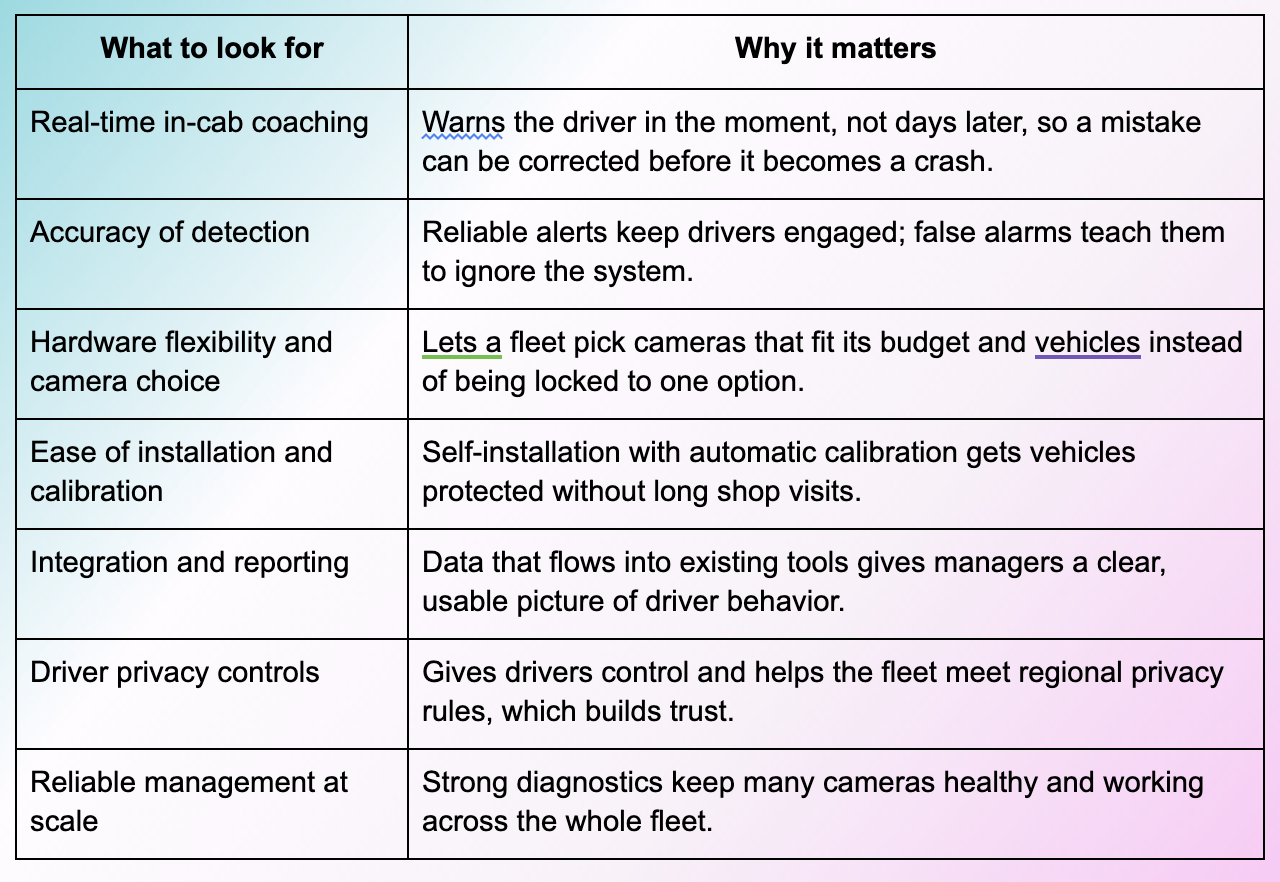
RideView was built around these criteria, with edge AI accuracy, a hardware-agnostic model, self-installation with automatic calibration, and diagnostics designed to manage cameras in the field at scale.
How Driver Safety Monitoring Fits Into a Fleet Safety Program
Software is a powerful tool, though it is not the whole program. On its own, a camera and an alert cannot change a culture. What surrounds the technology determines whether it actually makes a fleet safer.
A monitoring system works best paired with a clear policy, real driver buy-in, and consistent coaching. Drivers need to know what the system watches for and why, and they need to trust that the goal is their safety.
When those pieces are in place, monitoring improves behavior instead of feeling punitive. The technology becomes the enabler of a coaching culture, and that culture is what turns everyday data into fewer crashes on the road.
Driver safety monitoring software helps fleets prevent crashes rather than just document them. The strongest fit is a system that coaches in real time, protects drivers when they are not at fault, and respects their privacy along the way.
That combination turns cameras and data into safer habits and lower costs. We believe safer roads are both a moral goal and an economic one, and the right monitoring system moves a fleet toward both at once.
See how a modern, edge-AI video telematics platform works in practice. RideView analyzes the road and the driver, coaches in the cabin before incidents happen, and protects drivers when they need it most. Request a demo to watch it work with your own fleet in mind.
Frequently Asked Questions
What is driver safety monitoring software?
It is a system that uses in-vehicle cameras and sensors to watch how a vehicle is driven, spot risky behavior, and help drivers correct it before an accident happens.
How does a driver monitoring system work?
Cameras capture the road ahead and the driver in the cab, on-device AI analyzes that footage in real time, and the system delivers alerts or coaching based on what it detects.
What risky behaviors can driver monitoring software detect?
It can detect distraction and phone use, drowsiness, tailgating, speeding, harsh braking, lane drifting, and stop sign or traffic-light violations.
What is the difference between driver-facing and road-facing cameras?
A road-facing camera looks out at the road and surrounding traffic, while a driver-facing camera looks into the cab to watch the driver for signs of distraction or fatigue.
Does driver monitoring software invade driver privacy?
A well-designed system protects privacy by giving drivers a degree of control and helping fleets comply with regional regulations, so monitoring supports safety without feeling like surveillance.
How do you track driver behavior across a fleet?
Fleets track behavior through driver scorecards and reporting that summarize each driver's habits over time, giving managers a consistent basis for coaching.
