
How to Implement a Fleet Driver Safety Program: A Step-by-Step Guide
Learn how to build an effective fleet driver safety program with clear policies, driver training, preventive maintenance, video telematics, data-driven coaching, and measurable safety goals.
For many companies, the road is one of the most dangerous places their people work. A single crash can hurt someone and drain the budget at the same time.
A fleet driver safety program is how you get ahead of that risk instead of reacting to it. Yet many programs stall. They stop at a policy binder that sits on a shelf and never change how anyone actually drives.
We think that gap is the real problem. A fleet safety program only works when it changes daily behavior on the road.
In this guide, we walk through a clear, ordered way to build one. You will learn what the program includes, how to put it in place step by step, and how to tell whether it is working. Along the way, we will show how modern in-cab technology now makes prevention possible, not just paperwork.
What Is a Fleet Driver Safety Program?
A fleet driver safety program is the set of policies, training, monitoring, and maintenance practices a company uses to keep its drivers and vehicles safe and to lower liability. In short, it is the plan that turns "drive safely" into specific rules, habits, and checks.
The program applies to any organization that puts people on the road for work. That includes trucking fleets, delivery vans, service vehicles, and even personal cars that employees use for company tasks.
A strong program goes past basic compliance. Meeting the legal minimum keeps you out of trouble on paper. Fleet safety management is about actually preventing the crash before it happens.
Why a Fleet Driver Safety Program Matters
The clearest reason to run a program is crash reduction. Fewer crashes mean fewer injuries, and that is the point that matters most.
The benefits reach the business too. A working program can lower insurance and repair costs, support compliance, help you keep good drivers, and protect your reputation with customers.
We have always believed safety carries real economic value alongside its moral weight. Preventing a crash saves money, and it saves people.
There is also the question of liability. When a fleet vehicle is involved in a serious crash, the company can face a large jury verdict. Clear policies, consistent enforcement, and reliable records help protect the business when it needs to show what happened.
This is where driver behavior monitoring earns its place. Watching how people actually drive lets you fix risky habits early, and it gives you honest evidence later.
Core Elements of a Fleet Driver Safety Program
Before we get to the steps, it helps to know the pieces every strong program shares. Think of these as the building blocks.
You do not have to add all of them on day one. But over time, a mature program covers each of the areas below.
Written Safety Policies
Written policies set the rules everyone agrees to follow. They spell out expectations so nothing is left to guesswork.
Good fleet safety policy usually covers a few core areas:
- Seat belts: everyone buckles up, on every trip, without exception.
- Distracted driving: no phone use or texting behind the wheel while the vehicle is moving.
- Speeding: drivers follow posted limits and adjust for weather and traffic.
- Substance use: clear rules against driving under the influence of alcohol or drugs.
- Incident reporting: drivers know exactly what to do and who to tell after a crash.
Policies only work when you document them and enforce them the same way for everyone.
Driver Screening and Onboarding
Safety starts before a driver takes the wheel. Screening helps you understand who you are putting on the road.
Check each candidate's motor vehicle record and driving history. Look for patterns, not one-off mistakes.
Onboarding is your first chance to set expectations. Good fleet driver training begins on day one, so new hires learn your rules and your culture right away.
Ongoing Training and Coaching
Training cannot be a one-time event. Skills fade, roads change, and new risks appear, so the best programs keep teaching well past onboarding.
Useful topics include defensive driving and fatigue awareness. The most powerful training, though, is tied to what a driver actually did behind the wheel.
That is the idea behind event-based driver coaching. Instead of a generic class, you coach a driver on the specific moment that mattered. We build coaching around scored safety events, so managers can focus on the drivers and habits that need attention rather than watching hours of raw footage.
Vehicle Maintenance and Inspections
A safe driver still needs a safe vehicle. Mechanical failures cause crashes, and most are preventable with routine care.
Ask drivers to complete pre-trip and post-trip inspections. These daily checks catch problems like worn brakes or bad tires before a trip begins.
Back that up with preventive maintenance on a set schedule. A driver vehicle inspection report, or DVIR, creates a written record that a vehicle was checked and cleared.
Monitoring Technology and Video Telematics
Technology gives you visibility you cannot get any other way. You simply cannot ride along with every driver.
Telematics is the technology that collects data from a vehicle, such as location, speed, and hard braking. GPS shows you where vehicles are, while an AI dash cam adds a view of the road and the driver.
Here is the important distinction. Some tools only record footage you review after something goes wrong. Others prevent the problem in the moment.
Video telematics can do both. This is a category of fleet safety technology that pairs camera video with vehicle data and, in the strongest systems, artificial intelligence.
Our platform, RideView, is an example of the preventive side. It runs edge AI, meaning the analysis happens on the camera itself, on both road-facing and driver-facing views. When it detects risky behavior like distraction, drowsiness, tailgating, or speeding, it alerts the driver right in the cab so they can correct course before an incident. A driver monitoring system like this changes behavior while it is still happening.
Accountability and Incident Response
Rules need follow-through. Accountability is how you make sure the program applies to everyone, fairly.
Driver scorecards turn behavior into a simple, shared picture of how each person is doing over time. That gives coaching a clear starting point and keeps the conversation grounded in fact.
You also need a plan for when a crash happens. Good incident response includes clear steps to take at the scene, a root-cause review afterward, and corrective coaching to prevent a repeat. On-demand and event video helps here too. It can exonerate a driver who was not at fault and speed up claim resolution when the facts are clear.
How to Implement a Fleet Driver Safety Program, Step by Step
Implementation is not a single launch date. It is an ongoing effort that you build, run, and improve over time.
The sequence below turns the core elements above into action. Work through the steps in order, since each one sets up the next.
Step 1: Secure Leadership Commitment
A safety program lives or dies on leadership support. When leaders visibly back it, drivers and managers take it seriously.
Name an owner, or form a small safety committee, so someone is clearly responsible. Without that ownership, enforcement slips and the program fades. Federal safety guidance also puts senior management commitment first when building a driver safety program.
Step 2: Assess Your Current Risk
You cannot improve what you have not measured. Start by finding out where risk actually lives in your operation.
Identify every driver, including employees who use personal vehicles for work. Then review your crash and violation history to see the patterns.
This gives you a baseline. Once you know your starting point, you can tell whether the program is helping later.
Step 3: Write and Communicate Your Policies
Now put your expectations in writing. A clear fleet safety policy leaves no room for confusion about what is allowed.
Document the rules, then share them with every current driver. Fold the same policies into onboarding so new hires get them from the start.
Have drivers sign a simple agreement acknowledging the rules. A signature turns a policy into a shared commitment.
Step 4: Choose Your Safety Technology
Match your tools to your goals. The right technology should help you prevent problems, not just pile up footage you have to watch later.
Look for a few key capabilities:
- Real-time in-cab alerts: the system warns the driver in the moment, not days later.
- Video telematics: camera video and vehicle data come together in one view.
- Easy installation: cameras that a driver can set up quickly, without a technician.
Because a fleet dash cam and driver monitoring system will run for years, favor tools that fit how your team already works. RideView is hardware-agnostic and self-installing, and fleets get it through their telematics provider rather than buying it from us directly. That keeps the choice flexible and vendor-neutral.
Step 5: Train Drivers and Earn Their Buy-In
This step is where many programs stall. Cameras and rules can feel like surveillance if you do not explain them well.
Launch your training, and be honest about why the cameras are there. Tell drivers plainly that the goal is to protect them, not to spy on them.
Address privacy openly. We design driver-facing cameras to be privacy-first and to give drivers control, which builds trust. It also helps to point out the upside for drivers: when a crash is not their fault, video can clear their name.
Step 6: Coach With Data and Reward Safe Driving
With technology in place, coaching gets much sharper. Instead of guessing, you can coach the exact events that show real risk.
Use scorecards and event review to spot who needs help and why. Keep the coaching short, specific, and supportive, so drivers see it as help rather than punishment.
Balance the corrections with recognition. When you reward safe driving, whether through praise or incentives, you reinforce the habits you want to see. Positive driver coaching keeps good drivers engaged.
Step 7: Measure, Review, and Improve
A program is never truly finished. Roads, drivers, and risks keep changing, so your program should too.
Track your fleet safety metrics on a regular schedule. Watch how risky behavior, inspection compliance, claims, and driver retention trend over time.
Then act on what you see. Update your policies, coaching, and tools on a set cadence so the program keeps getting stronger.
How to Measure the Success of Your Program
You do not need a huge dashboard. You need a handful of metrics that tell you whether behavior is actually changing.
It helps to split them into two kinds. Leading indicators warn you early, before a crash. Lagging indicators tell you what already happened. A good program watches both.
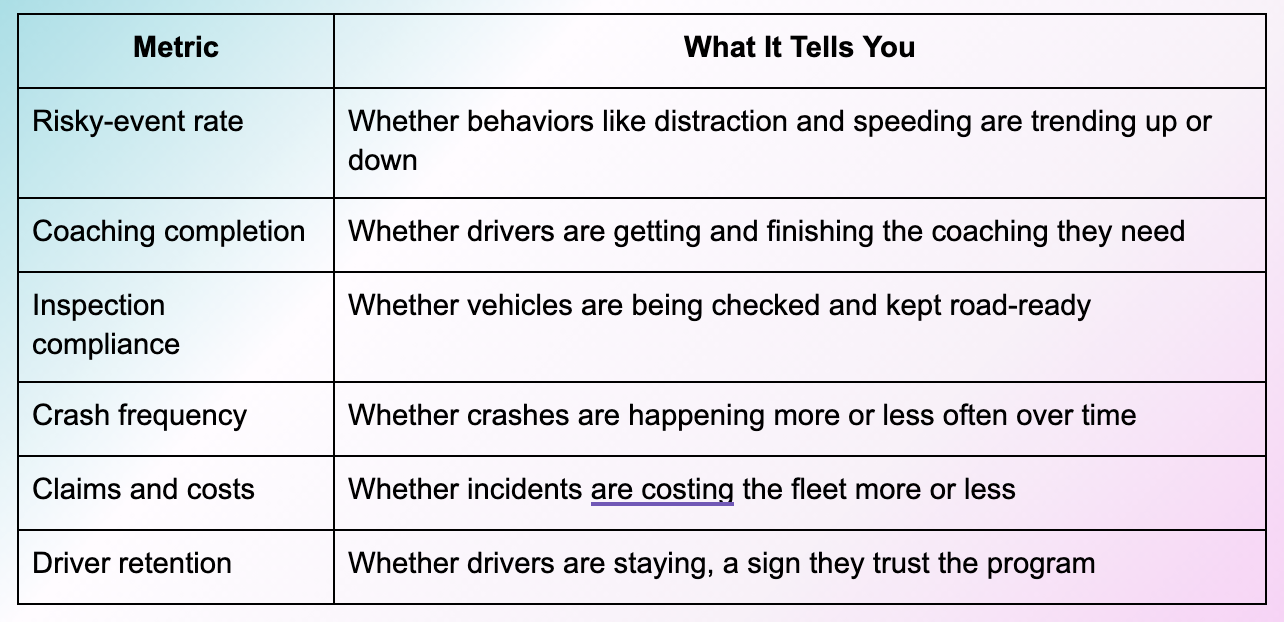
Leading indicators are where in-cab technology helps most. Because alerts and safety events are captured as they happen, you can watch risky behavior trend down in near real time, long before it would show up as a crash statistic. Driver behavior monitoring turns safety into something you manage day to day, not something you only learn about after the fact.
Common Mistakes to Avoid
Even well-meaning programs run into the same traps. Knowing them in advance helps you steer clear.
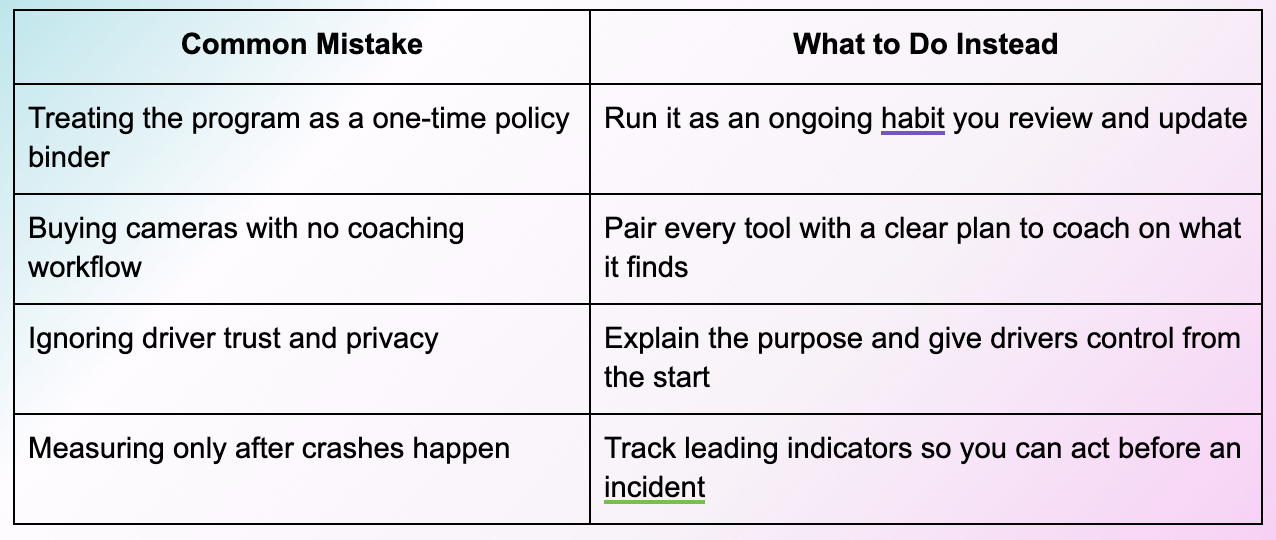
The thread running through all of these is prevention. A camera that only records footage leaves you drowning in video after the fact. Making that video actionable, so it drives coaching and stops the next incident, is what separates a program that works from one that just documents what went wrong.
A fleet driver safety program works when four things come together: engaged leadership, clear policy, the right technology, and coaching driven by real data. Just as important, it works when drivers trust the system and see it as protection rather than surveillance.
The good news is that the tools have caught up with the goal. Modern in-cab AI shifts a program from reviewing crashes after the fact to preventing them in the moment. That is the change we care about most, because it protects both the business and the people behind the wheel.
Ready to see how in-cab AI and video telematics can power your safety program? RideView helps telematics providers and fleets prevent risky driving, coach with data, and protect drivers with on-demand video. See it in action for yourself.
Frequently Asked Questions
What Is a Fleet Driver Safety Program?
It is the set of policies, training, monitoring, and maintenance practices a company uses to keep its drivers and vehicles safe while lowering liability.
What Are the Key Elements of a Fleet Safety Program?
The core elements are written policies, driver screening, ongoing training and coaching, vehicle maintenance, monitoring technology, and accountability with incident response.
How Do I Start a Fleet Safety Program With a Small Fleet?
Start with leadership buy-in and a written policy, add one or two high-impact tools such as an AI dash cam, then expand as you grow.
How Does Technology Improve Fleet Safety?
Real-time in-cab alerts and video telematics help prevent risky behavior as it happens, and they provide clear evidence for coaching and claims.
How Do I Get Drivers to Accept In-Cab Cameras?
Explain the purpose plainly, be transparent about privacy and the controls drivers have, and highlight how video can exonerate them when a crash is not their fault.
How Do I Measure Whether My Program Is Working?
Track leading indicators like risky-event and coaching trends alongside lagging indicators like crash frequency and claims, and review them on a regular schedule.
